If walk into almost any modern home today, you’ll notice something interesting: people are paying closer attention to the air they breathe indoors than ever before.
A few years ago, air purifiers were often used only by allergy sufferers or people in very polluted cities considered buying. Today, that mindset has changed dramatically. Families with young children and remote workers spending long hours indoors are now investing in advanced air purifier systems as part of a healthier lifestyle.
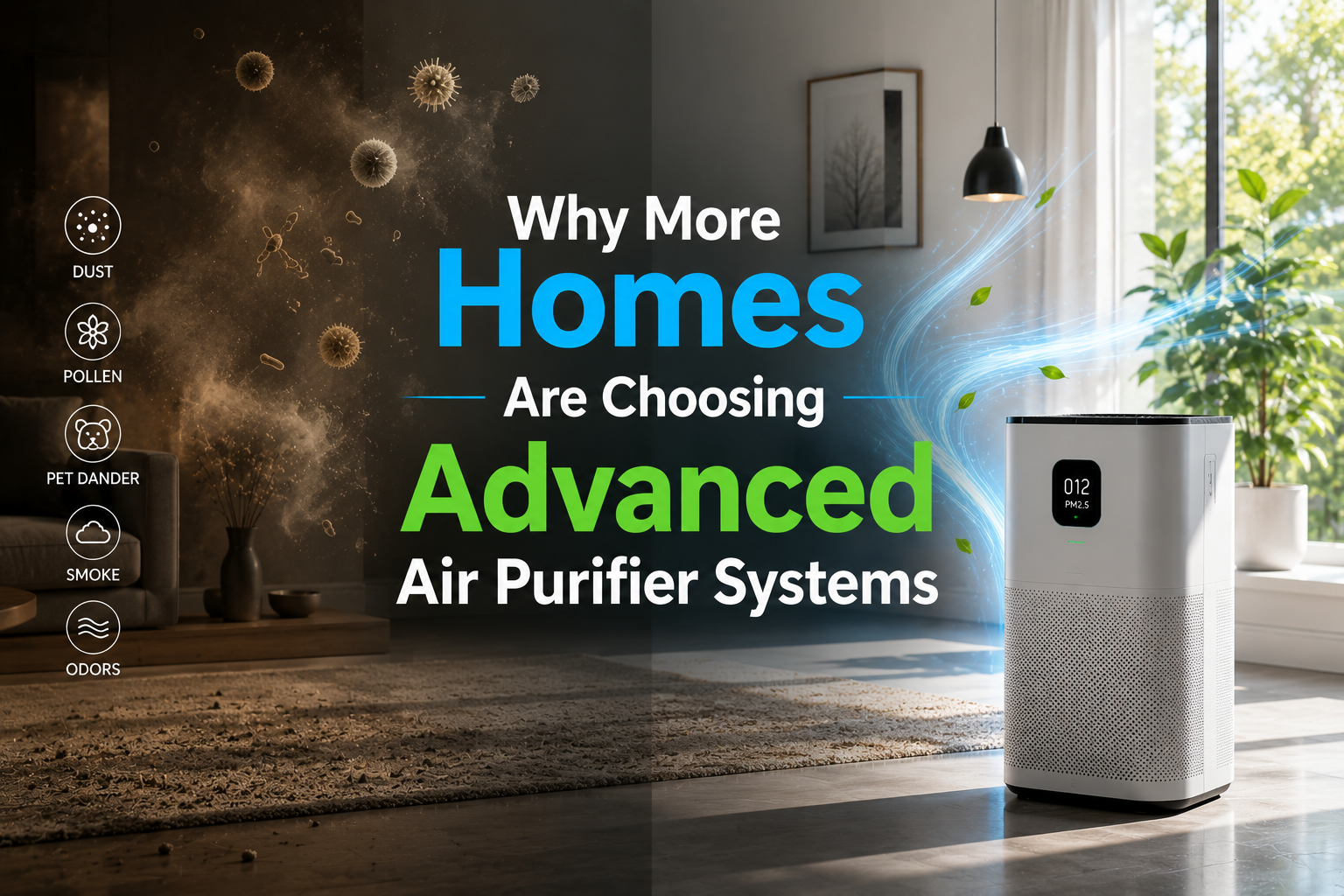
People are now realizing that indoor air can sometimes be more polluted than outdoor air, especially in tightly sealed homes designed for energy efficiency. Dust, pet dander, cooking fumes, cleaning chemicals, mold spores, and even tiny airborne particles can quietly build up inside living spaces every day.
Unlike visible messes, poor air quality often goes unnoticed until it starts affecting sleep, focus, allergies, or overall comfort.
The Hidden Reality of Indoor Air
One big misconception about air pollution is that it only exists outdoors. In reality, many homes trap pollutants inside for hours or even days.
Everyday activities lead to indoor contamination:
- Frying food releases fine particles.
- Scented candles and air fresheners emit volatile compounds.
- Carpets and furniture gather dust and allergens.
- Pet hair moves through ventilation systems.
- Open windows can let in pollen and outdoor pollution.
What makes this particularly concerning is the size of many airborne particles. Some are so tiny they can travel deep into the respiratory system without being noticed.
This growing understanding is one reason advanced air purification technology has become a significant topic in modern homes.
Why Basic Filters Are No Longer Enough
Traditional filters can help with larger particles like visible dust, but many homeowners are now looking for systems that can tackle much smaller contaminants.
Advanced air purifier systems are designed to capture ultra-fine particles, including smoke, bacteria, allergens, and airborne pollutants that standard filtration may miss.
Technology has evolved significantly in recent years. Modern systems now include features such as:
- Multi-stage filtration
- UltraHEPA filtration
- Smart air quality monitoring
- Quiet operation modes
- Real-time particle detection
- Energy-efficient airflow systems
Instead of just masking odors or circulating air, these systems actively improve indoor environments in measurable ways.
For households dealing with wildfire smoke, urban pollution, or seasonal allergies, that difference can be substantial.
The Rise of Wellness-Focused Homes
The concept of the “healthy home” has grown beyond organic food or fitness equipment. Today, people are designing homes around wellness. Air quality is becoming as important as lighting, water filtration, and ergonomic furniture.
This trend sped up as more people began working from home. Spending eight to ten hours indoors each day made many homeowners more aware of headaches, fatigue, and poor air circulation.
Clean air is now seen as part of everyday performance and comfort, not just a health concern.
Parents are especially focused on this shift. Many are looking into how indoor air impacts sleep quality, concentration, and respiratory health for children. Pet owners are also choosing advanced air purification systems to manage dander and odors without relying heavily on chemical sprays.
As awareness increases, consumers are becoming more choosy about what qualifies as a good air purifier. They want proven filtration performance, quieter systems, and technology that works continuously without becoming disruptive.
Smart Technology Is Changing Expectations
Another reason advanced air purifier systems are gaining popularity is the integration of smart technology.
Modern consumers expect appliances to be smart, responsive, and efficient, and air purification is no different. Many newer systems automatically adjust fan speeds based on detected air quality levels. Some monitor particle levels in real time and provide updates throughout the day.
This gives homeowners something previous generations lacked: visibility.
Instead of guessing whether the air feels clean, people can track changes after cooking, cleaning, or opening windows. For instance, many users are surprised to find out how quickly indoor particle levels can spike after simple tasks like vacuuming or burning candles.
This real-time awareness has changed air purification from a passive appliance into an active part of home management.
Why Performance Matters More Than Marketing
As demand for air purifiers rises, so does the number of available products. But informed buyers are learning that not all systems provide the same results.
Many low-cost purifiers use basic filtration that captures larger debris while allowing ultra-fine particles to keep circulating.
That’s why filtration standards have become a major focus for educated consumers.
Systems using advanced technologies like UltraHEPA filtration are gaining attention because they target particles much smaller than traditional HEPA standards.
Brands like AirDoctor have become increasingly recognized because consumers are looking beyond looks and concentrating more on actual filtration capabilities, room coverage, and long-term reliability.
Instead of choosing products based solely on price or appearance, homeowners are researching airflow performance, filtration efficiency, and independent testing standards before making choices.
This shift reflects a broader consumer mindset: people want products that genuinely improve daily living.
The Emotional Side of Cleaner Air
One often-overlooked reason people invest in advanced air purification systems is peace of mind. There’s comfort in knowing your home environment is actively being cleaned throughout the day.
For allergy sufferers, this can mean fewer interruptions during sleep. For parents, it can mean feeling more confident about nursery air quality. For remote workers, it may simply create a fresher, more comfortable environment during long hours indoors.
Cleaner air often becomes one of those lifestyle upgrades people don’t fully appreciate until they experience it consistently.
And unlike temporary wellness trends, indoor air quality is something people experience every minute of every day.
Conclusion
The next generation of homes will likely view air purification the same way previous generations viewed heating and air conditioning, as an essential part of everyday living.
As pollution concerns, wildfire seasons, and urban density continue to rise globally, advanced filtration systems are expected to become more common in households of all sizes. At the same time, consumers are becoming more informed. They’re asking smarter questions about filtration technology, particle capture, and indoor environmental quality.
This means the future of home wellness will be about choosing systems that combine science, performance, and real-world usability.